
All Hands On Deck
Why I think outdoor brand Patagonia should go all in on helping build people powered resistance to ICE and the Trump regime.

As I’m sitting here writing this, another US citizen has just been shot dead at point blank range by a gang of masked ICE agents. I am sitting on my laptop in a small town on the west coast of Norway. It is peaceful, cold and snowy here. It feels like a long way from what is happening on the other side of the Atlantic. But I feel compelled to write because to tell you the honest truth - I am very frightened by what we are witnessing. I am scared that what we are seeing in the USA right now - a battle between democracy and dictatorship - could end up here in Europe too.
But what is compelling me to write this more than anything is because of what I am not seeing. My instagram feed from those I follow in the USA is still full of photos of nice looking mountains, cool snowboard lines and companies trying to sell me jackets.
What we are seeing play out before our eyes is not normal. It has not been normal for a long time. I believe that it is fascism taking hold. I watched this interview with Steve Bannon recently - he claims that no matter what, Trump will get a third term in 2028. He talks about Trump being “a vehicle of divine providence”. Trump himself said recently that the only constraint to his power as president is “my own morality, my own mind”. People are getting kidnapped off the street by masked gangs and disappeared into detention facilities in El Salvador. Any political opponent is being described as a terrorist or the “radical left”. Words like “climate change” or “diversity” are being removed from federal websites. Climate data has been deleted. Trump is kidnapping foreign heads of state to take their oil and is trying to force other leaders to capitulate to his plans to buy Greenland or else he will cripple them with tariffs.
Academics who have spent years studying authoritarianism like Marci Shore, Timothy Snyder and Jason Stanley are calling it fascism. Marci Shore said in an op-ed in the New York Times: “I want Americans to realize that this is a democratic emergency”. In an article in the Guardian - even many of Trumps former advisors call him a fascist.
Dutch news website De Correspondent published an article called “This is fascism”. It begins with the quote:
Fascism starts with talk, not tanks. With democratic elections, not a coup. And it takes hold thanks to people who think things won’t move quickly—until they do just that.
A democratic emergency
So why have I addressed this article to the outdoor clothing company Patagonia?
Lots of people have had opinions on Patagonia the last few years.
I launched this newsletter last April with an article entitled “Moving Beyond the Back-Patting” - it was all about Patagonia’s decision to give away the company to a non profit trust in order to “make earth their only shareholder”.
In that article I questioned whether this move really met the moment that we are in. And to think, that was way back in April 2025.
I questioned whether Patagonia needed to do more - like directly mobilising the millions of people on their social media and mailing lists for direct action and civil disobedience to challenge the Trump administration.
The main point I wanted to get across in that article was that we should cast a more critical eye and question whether there is not more that needs to be done at the present moment.
I read the other day Foster Huntington’s piece on Patagonia after his 1 year working in Ventura. To be honest - I am not that interested in getting into the debate about whether selling more environmentally friendly clothes is going to solve our problems. Or the morality of celebrating an increase in sales after putting an advert in the New York Times telling people not to buy a new jacket.
For me this comes down to something more practical.
Something that I think we are in desperate need of in the present moment.
The resources to organise and build powerful political movements that get people off social media and into town halls, meeting rooms and the streets.
Basically, I see that Patagonia has enormous resources and I wonder if they could be put to use more effectively. It was reported that they were likely to be putting $100 million a year in profits into the Holdfast Collective. They have an absolutely massive platform to reach people. And they have been one of the only outdoor brands willing to take any kind of risk the last few years when it comes to speaking out politically.
Sure - you can complain about their latest impact report which showed that, surprise surprise, there is a pretty big impact associated with mass producing clothes. Only 39% of the factories it makes clothes in are paying people a living wage. And we can definitely question whether constantly sending out marketing emails encouraging us all to buy new jackets is really in line with their often touted mission statement that they are “in business to save our home planet”.
Yvon Chouinard, the founder of Patagonia, said in a video launching the Patagonia Action Works platform in 2018: “Patagonia’s reason for existence is to force governments and corporations to take action in solving our environmental problems”.
At the end of the day, we are not going to get anywhere close to solving the climate crisis or our “environmental problems” if we have a dictatorship in the USA hell bent on digging up as much oil as possible.
So I think it is a pretty legitimate question, especially after that quote from Chouinard above about their reason for existence, to ask whether Patagonia is doing enough to resist the Trump regime.
I am writing this article because I feel like we are in an all hands on deck moment. There is a huge amount of very inspiring grassroots organising going on right now. The resistance we have seen in Minnesota in the last few weeks will likely go down in the history books.
But it needs to happen across the country in every state.
Like in the civil rights movement - thousands of people need to be trained in organising and non violent resistance. Multi year funding commitments need to be made to pay for people to organise communities across the country. We need groups in society who have never been involved in politics before to receive a clear pathway into political action.
The Trump administration feeds off violence. They are waiting for people to be violent so they can crush any form of resistance. People have different theories of change. I believe that civil resistance on a mass scale is a pretty damn effective way to confront entrenched power like the Trump regime. But it needs a huge amount of people, strategy, organisation and discipline for it to be effective.
We need sit down protests at ICE detention centres, mass arrests, shutting down roads, direct action against companies working with ICE, legal challenges and mass mobilisation on a scale that the USA has not seen before. Most important of all is when it comes to the midterms next November - the entire country needs to learn from the success of Mamdani in New York (and recent election campaigns in Europe) on the success of door knocking in being incredibly effective at going up against the well funded political campaigns of the right.
All of this needs a massive amount of funding and leadership. People need to step outside of their comfort zone. Risk needs to be taken. In this article I want to propose that Patagonia should be one of the actors taking a lead in this effort.
I don’t have a huge grasp on American politics and all the different organising efforts that are going on right now. I don’t have the inside information on what Patagonia is funding and has planned this year. Who knows - maybe they are doing all the things I am going to suggest in this article. But my hunch is that this is not the case. I am on their email list. For the past few weeks I have been waiting for an email from them with a clear call to action for how to get involved in the resistance to all that is going on right now. Have I received one? No, I just got another email telling me how to pick the right down jacket.

I saw their Instagram post on Martin Luther King Jr. day - about the importance of direct action and nonviolence. Was there at the bottom of the caption a sign up link for the next mass training in nonviolent action that Patagonia is encouraging all of its followers to join? No. Their CEO Ryan Gellert is still writing nicely worded letters in Time Magazine.
So that is why I feel compelled to write this.
The Importance Of Risk Taking
Risk is the currency of moral leadership. Patagonia has a track record of putting skin in the game. They were one of the first to close their stores on Black Friday, they donated their 2017 tax‑cut windfall to environmental groups, they have already sued the Trump administration over public lands, printed “VOTE THE ASSHOLES OUT” on their shorts in the run up to the 2020 election and transferred ownership of the company in 2022 to a non profit trust.
Those moves have mattered.
We can debate their effectiveness - but one thing is for sure - Patagonia has shown leadership over the last years while many other outdoor brands have been floundering. It’s been clear that the company has been willing to accept real downsides in order to defend their values.
But I believe that January 2026 is a moment where we all need to take a step back and reflect on whether what we are all doing is enough.
Leadership in 2026 now requires visible, principled exposure to reputational, financial, and legal risk. Practically speaking, and what I will go into in the rest of this article - is that I think Patagonia needs to go absolutely all in on funding the resistance against ICE and mobilising for the midterms in November. Maybe this means dropping their entire marketing budget for the year. So be it. They might lose customers, face political attacks and have internal friction.
Those costs are the price of credibility.
If Patagonia truly intends to live by its mission to “save our home planet,” it must get real to the current moment that the world is in.
So what does this mean on a practical level?
It Is All About Organising!
As Dr Martin Luther King Jr. said:
“Those who love peace must learn to organise as effectively as those who love war”
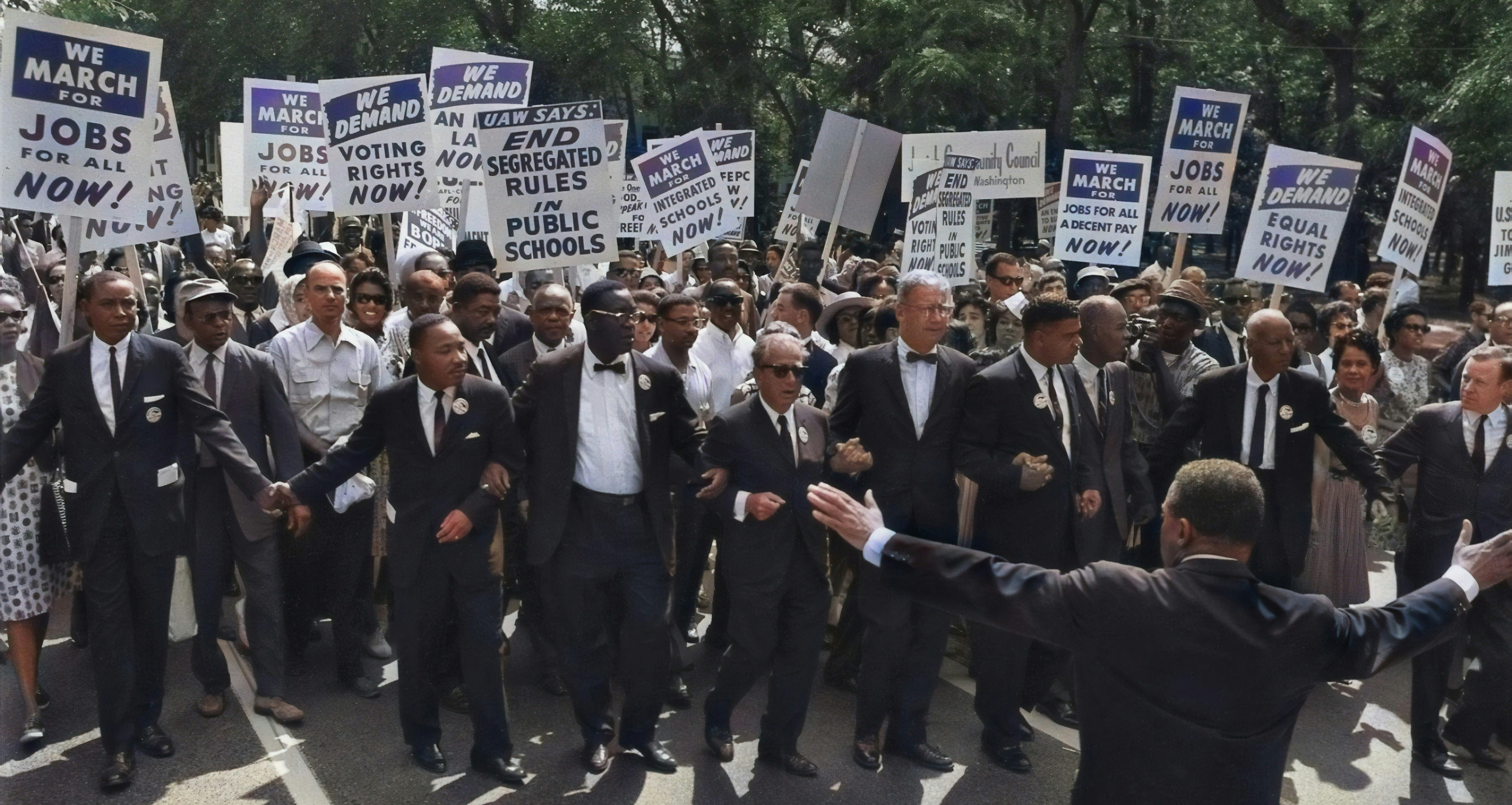
That is what the right has been doing successfully for years now. They have understood that in order to win they need to build power - from school boards all the way up to the presidency. While the left has been shouting at each other online, the right have been in communities mobilising people and building a massive base of power.
So this is what I think Patagonia should use their platform and money on. I had a look at the Patagonia Action Works site the other day. It is pretty good - you can sign up to be a volunteer for loads of different organisations, sign petitions and find groups that are organising a whole host of different events in your area.
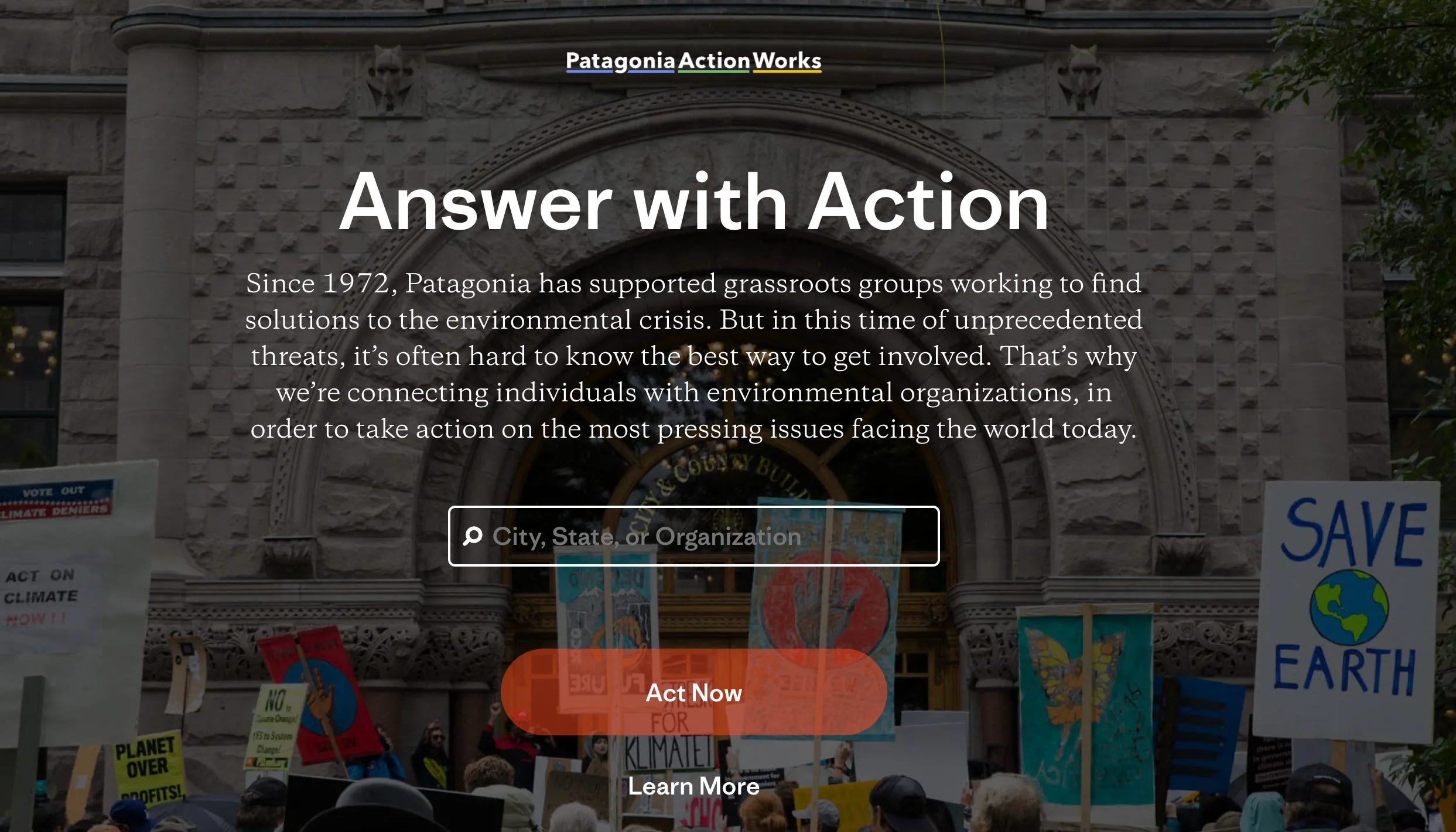
But to me - there seems to be very little coherent strategy around it. It is just a portal to loads of different initiatives. It does not feel like it is all working towards something bigger. I think at this moment in time - organisations like Patagonia should be developing a very clear strategy for how they can give people a concrete pathway to action that is rooted in building this collective power.
As I already said - in the present moment I think that means challenging ICE and in the longer term I think that means funding a massive get out and vote campaign for the midterms in November. They should learning from the success of Mamdani in New York who built a people powered movement based on speaking to people at their doorstep - and having a clear structure for how you can mobilise hundreds of thousands of volunteers to come out door knocking with you.
This requires a pathway to action.
There are obvious ways to challenge ICE. You could do sit down protests at detention centres all over the country. You could put pressure on other companies who are providing services to ICE - like hotel chains and hire car companies. You could pay for lawyers to take out legal action against ICE in different states.
In my opinion though all these things require training. Mass nonviolence training like in the civil rights movement. They had the Highlander Folk School which hosted multi day workshops in nonviolent theory, role play and campaign strategy. The Southern Christian Leadership Conference and Student Nonviolent Coordinating Committee organised mass training sessions before doing sit-ins, Freedom Rides and voter registration drives. They prepared huge numbers of people before they went out and took action. They role-played lots of different scenarios, practiced de-escalation and briefed people on their legal rights. They were scalable and prepared dispersed activists into a disciplined and effective mass movement.
To get thousands of people into trainings like this requires infrastructure and money. Patagonia has both of these things. Imagine if they turned their whole Patagonia Action Works site into the infrastructure for helping to build this kind of organised mass movement?
What infrastructure does it need?
It needs a very easy way for people to get involved. That means creating a pathway to training and action. Patagonia could put the money into employing full time multi year organisers in every state. They could host trainings, help mobilise for mass action and organise get out and vote drives in the lead up to November.
On the Patagonia Action Works site you could have a simple sign up form for people to put in their contact details if they are interested in joining. Those people would all then get the follow up information for the trainings happening closest to them. Patagonia could even employ phone bankers so that within 24 hours - every single person who signs up on the website gets a phone call giving them more information and a clear next step for what to do to involve themselves further.
They could be funnelling all of their customers into this pathway. Instead of sending out mass emails promoting the latest down jacket - they could be splitting up their email list into segments for each city and advertising the next training happening there. Every social media post to their over 5 million followers could have a clear call to action to sign up your details on the Patagonia Action Works site - with all those people being funnelled into the pathway in their State. All starting with training.
What I think should be central to any strategy like this is getting people offline.
Creating a pathway which gets people away from social media meltdown and into organising with real people. That is what will give people agency and build genuine political power in 2026.
Funding and Skills
This is the thing that I find most interesting about Patagonia. They have an enormous amount of money to inject into building the foundations of something like this. I work every day trying to get funding for political campaigns in Norway - it is hard work. Patagonia has already committed to putting all of their profits into the Holdfast Collective - a 501(c)(4). The structure for injecting a lot of money into building a movement capable of really challenging the Trump regime is already there. It just needs commitment.
The Holdfast Collective have already given millions away. It gave $5 million in 2024 to the Nature Conservancy to protect the Alabama’s Mobile-Tensaw Delta. But in order to have any chance of dealing with the climate crisis - we need to act on the democratic emergency which is happening right before our eyes.
The other thing which Patagonia already has is a huge amount of people with the skills needed to funnel a lot of people into a political project. Graphic designers to make everything look cool, marketing people to make sure as many people as possible see the call to action, event organisers to help logistically with putting on mass trainings, social media experts to reach as many new people as possible and lots of ambassadors and athletes who can spread the message in their own channels. Patagonia also has shops all across the country which could be used as community hubs for people to meet and organise from.
Testing and Scaling
I’m not saying that Patagonia should do all these things straight away. But what they could do is choose one city and test some of these ideas. See how many people they could get into a nonviolence training, iterate it a few times and figure out how best the whole thing works. Build something that is scalable to other cities.
But it is about doing something and learning from it.
So many people feel lost and without agency right now - scrolling on social media and going into a spiral of feeling like everything is getting worse but not having a concrete way to do anything about it other than scream at each other online. I think companies like Patagonia, who say they are in business to save the planet and have a lot of resources to commit to doing so, have a real responsibility right now to try new things, take risks and learn from them.
It is clear that the same tried and tested tactics of the last 15 years have not been enough.
So, what now?
This has been quite a difficult article for me to write. I don’t really know all that much about American politics. I feel like I am wading into something I feel quite out of my depth speaking about. I am most likely going to get criticised for some of the stuff I have written in this article.
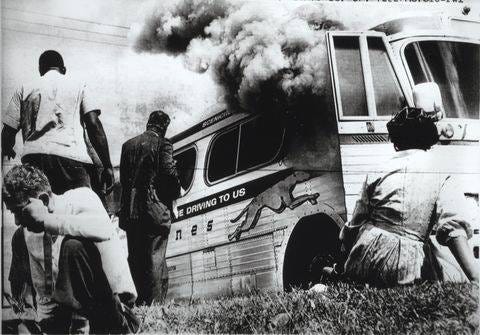
Im not saying any of this stuff is easy. People will probably think it sounds incredibly privileged for me to be sitting here in Norway telling people in the USA what they should be doing. Protest and direct action is a completely different proposal in a country like the USA where everyone has a gun, I get that. But challenging power and creating political change has never been easy. Many of the Freedom Riders - those who rode interstate buses into the segregated deep south in 1961 to challenge and provoke enforcement of federal rulings banning segregation on interstate travel - wrote their last will and testament before getting on the buses. They knew the potential violence they were facing and they chose to go anyway. For them the price was worth paying to force change. This is the kind of leadership, courage and discipline we need to see in 2026.
I have for a long time looked up to a lot of the work that Patagonia has done to use their business to push for change and lead the way. But I am writing this article because I think that there are certain times in history where we all need to take a step back and take a hard look at what we are doing and why. I think that now is one of those moments. I am writing this article because I feel there are people out there who want to have a conversation about these themes and I hope it can stimulate some kind of positive debate. Of course what I have written here is just skimming the surface of these topics and it requires going into much more detail.
I am going to finish with a quote from novelist Siri Hustvedt who wrote on social media the other day about her mother growing up in Norway during the Nazi occupation:
“Early in the Nazi occupation of Norway, my mother joined a protest. Later, she was given a choice to pay a fine or go to jail for nine days. She chose jail. Her jailer was a Norwegian Nazi. My mother was eighteen years old. She always said that a few months later, no one even dreamed of organizing protests. All opposition went underground.”
There is still a window of time where resistance against what we are seeing play out in front of us is possible. But it needs organisation, mass numbers, funding, discipline and sacrifice. I know there are a lot of incredibly dedicated people in the USA working these things and are doing amazing work. But it needs all hands on deck. I feel that Patagonia have resources that could be effective in this fight for democracy, and I hope this article can persuade some more thought around how these resources are used.
I think this is a nice quote to end on - from Patagonia founder Yvon Chouinard:
“The cure for depression is action. Every one of us has to step up and do what you can according to what your resources are.”
Some things I have been reading which influenced this piece:
This is Fascism - De Correspondent
A call to action from Minnesota organisers
Fighting Back in Minneapolis and Across the Country
Dictatorship Isn’t a Theory, Folks. It’s Here.
Patagonia’s new owner is the non-profit Holdfast Collective
Here’s How to Find Out Which Corporations Are Collaborating With ICE
Thanks a lot for reading if you got this far. I haven’t written anything on Substack since the summer. To be honest I have just been very busy doing campaigning work and also felt like I had very little of use to say. I have also been rehabbing myself back from a bad shoulder injury and concussion I got during the summer which has taken up a lot of my spare time.
But I feel ready to start up more regular writing here again now and I feel like I have various reflections to share about the work I have been involved with this autumn. We have started a new campaign in Norway to democratise the Norwegian oilfund, started the Ski Fossil Free campaign to pressure the IOC and FIS to stop fossil fuel sponsorships and various other writing things that I feel I have quite learnt a lot from. That is the reason I started this little project last year basically - because I miss writing and reflections on activism, campaigning and organising from people that are deeply involved in the work itself.
I really appreciate all the people that have subscribed to this newsletter and especially all those that have contributed with paid subscriptions. The next article is going to be about 3 things I have learnt through the launch of the Ski Fossil Free campaign - which now has 18 000 signatures and is getting handed to the IOC in Milan next week. Check it out here.
Thanks for writing up this great piece on the need for companies like Patagonia to step back in order to step up, Calum!
It's been interesting to explore some of these ideas together and do this kind of piloting you're talking about - discovering the dynamics of social change real time. With Catalyst (https://catalystcrm.org/) we're working on perfecting and scaling up those activation pathways, making it easier for organizers to train people at scale and increase their impact manifold.
Seeing first hand how desperately the movement needs the resources that Patagonia has access to, I'd be excited to see more strategic, guided action from their side. We're all here with the knowledge of how to organize, ready to make the most of Patagonia's organizing spaces, graphic designers, marketing people, event organisers , social media experts, ambassadors, athletes, and funding!
I'm looking forward to continuing organizing with you to protect democracy and the climate, and hope some of these heavy hitters choose to step up their game, joining us on the right side of history.
Chilling! And, sadly, none of what you say is sensationalist. Truth, stranger than fiction. Well, not strange at all, actually. Because we have seen, lived, or read about it all before. And because we have seen it coming for almost a decade now. It's so easy to mollify, to deny, to talk ourselves down from the impending cliff edge of panic and despair. To look way, put fingers in our ears and say "la la la la la la la, oh blah dee, oh blah dah, life goes on" even when we see with our own eyes that life doesn't always go on, not for everyone. Life is being devalued, allowed under certain conditions--namely fealty to power. The Hogwarts Wizards are not going to save us. Only we can save ourselves.